

Emergent Minimalism
Studio Remanence
Imagined media
About the Artist
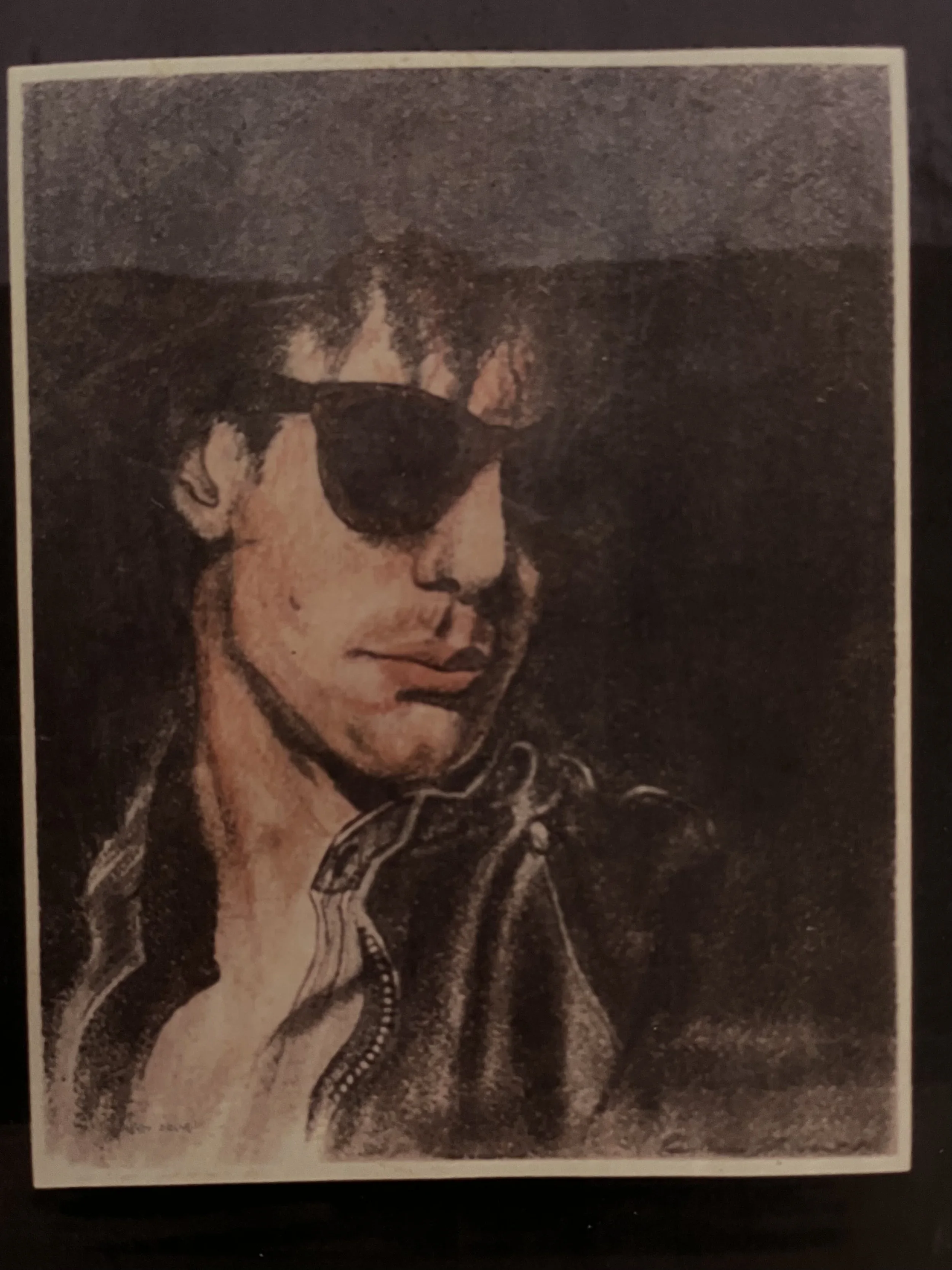
Self Portrait - 1985-
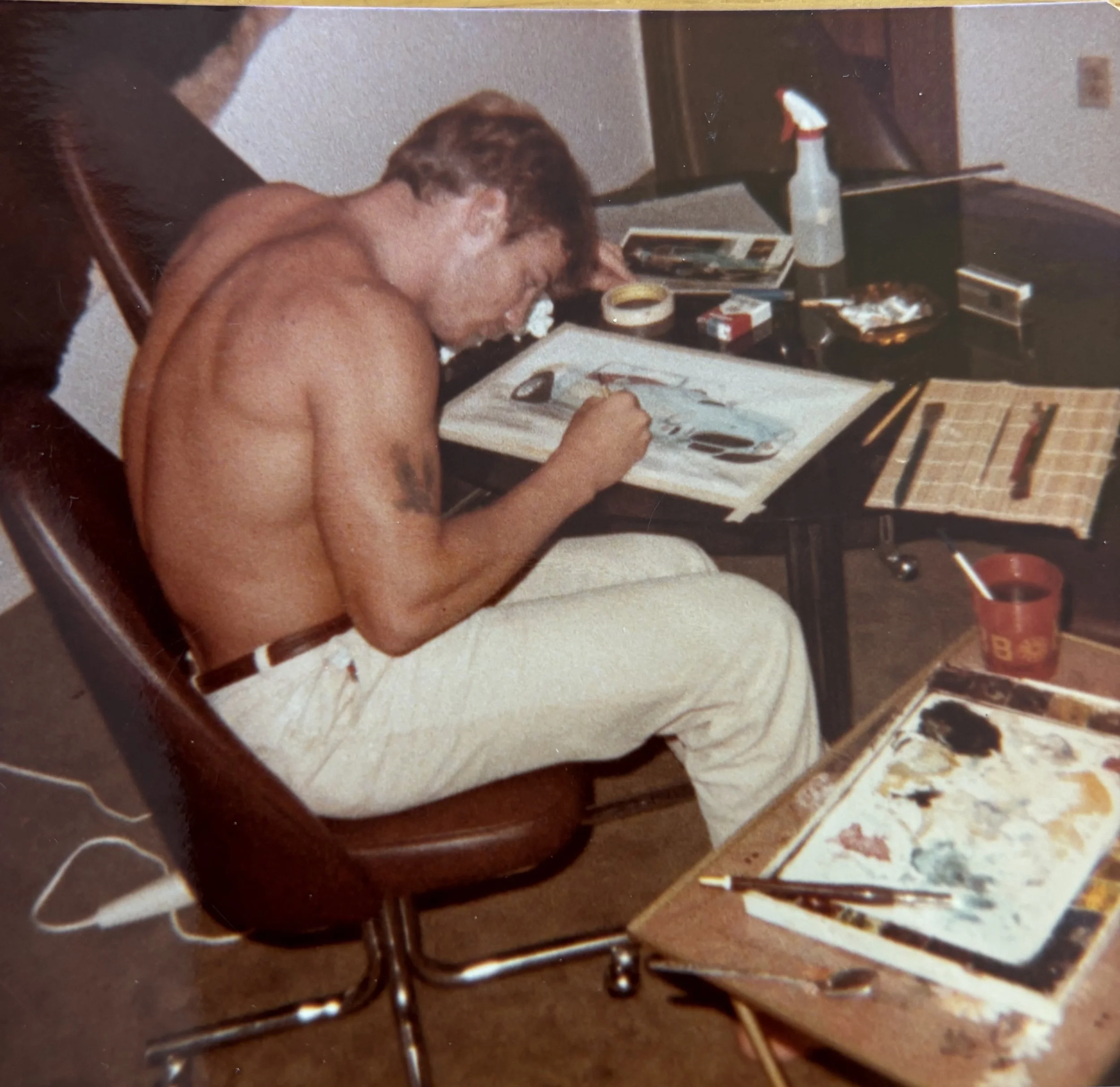
Painting a watercolor -circa 1980-
“ EMERGENT MINIMALISM “
Opening
My journey into art has been a journey into imagination.
Over time, my understanding of what it means to create has changed. I have become less interested in representing a particular idea and more interested in creating the conditions for an idea to emerge. I am drawn to what remains when unnecessary elements are removed, when a surface is allowed to breath, and when the relationship between presence and absence becomes as meaningful as the materials themselves.
I call this approach Emergent Minimalism.
It is not an attempt to make minimalism an end in itself, nor is it a pursuit of simplicity for the sake of appearance. It is an exploration of how little may be necessary to make something meaningful, and how much may exist within what appears to be very little. Reduction is not the destination. It is a means of making room.
Material, Light, and perception
I am interested in the point at which an object begins to suggest something beyond itself: when a mark becomes a possibly, a texture becomes a landscape, a reflection becomes a memory, or a quiet surface begins to hold a presence that cannot be entirely explained. These moments are not imposed upon the work. They emerge through the relationship between what is physically present and what the viewer brings to it.
My materials are part of this exploration. Paint, texture, metallic surfaces, reflective coatings, and the interplay of light each contribute to a work’s changing character. A surface may reveal something under on condition and conceal it under another. What appears dark may hold a reflection. What appears uniform may contain subtle differences. Something seemingly absent may become perceptible through a shift in light or position
The work is never entirely separate from the conditions in which it is encountered. Light changes. Perspective changes. The viewer moves. A surface that seemed to offer little may begin to reveal more, while something initially obvious may recede. The physical work remains, yet the experience of it is not fixed.
The Viewers Imagination
The relationship between material, memory, and perception has become central to my practice. I am interested in the space between seeing and recognizing, between observing something and imagining what it might mean. The eye receives what is present, but the mind is never merely a passive observer. It associates, remembers, questions, invents, and makes connections. We bring our experiences to everything we encounter, often without realizing how much those experiences influences what we see.
The act of creating brings me its own joy and fulfillment. I find satisfaction in the process of making, in the discoveries that occur along the way. Yet, as the work develops, another source of excitement accompanies that process: the possibility of what someone else might experience when standing before it. I often find myself thinking about the viewer, not in an attempt to determine what they should see, but in anticipation of what they might discover. What associations might arise? what memories, feelings, or unexpected connections might the work awaken? I cannot know, and i would not want to decide those things in advance.
My intention is to create an opening rather than provide an answer. The work offers something tangible to encounter, but it does not prescribe what that encounter must become> I want to give the viewer enough to enter the experience, while leaving sufficient room for their own imagination to participate.
Restraint and Meaning
This is why I am careful about explanation. Words can offer a useful point of departure, but too much explanation can establish boundaries around an experience that might otherwise have developed in unexpected ways. I would rather risk saying too little than say so much that I inadvertently narrow the possibilities. The Work should be able to stand on its own, inviting attention without demanding a particular response.
There is no predetermined interpretation waiting to be discovered, and no preferred conclusion against which the viewers experience must be measured. Each person arrives at a different history, a different imagination. The same work may therefore open entirely different doors for different people.
A small interruption in a broad field mat be enough. A subtle variation may require a second look. A title may offer a point of departure without establishing a final destination. The relationship between the work and its title can be as important as the individual elements themselves, not because one explains the other, but because together they may create a possibility that neither could produce alone.
I find that possibility deeply rewarding. I make the work, but i cannot make the experience what another person will have with it. That experience belongs to them. My role is to create something that makes the encounter possible, then leave enough space for it to unfold.
An Open Door
My practice continues to evolve through the tension between making and leaving alone, between revealing and concealing, between the tangible object and the less tangible experience it may encourage. I am interested in the moment when a work no longer needs to announce itself, when a viewer can approach it without instruction and discover that the act of looking has become an act of creation.
Perhaps this is the essential distinction between making an image and making room for imagination.
The Image is present. The experience remains open.
I think of this journey into imagination because imagination is not something I can place on a canvas and deliver to another person. It is something that already exists within them. At its most successful, my work does not ask the viewer to enter my imagination and remain there. It offers a point of departure from which their own may begin.
The work, in the end, is not only what remains on the surface.
It is also what becomes possible in the person who stands before it.
Brandt Allen
2026